Location of Four Demo site of Smart SIP + Project in Bangladesh
These demonstration sites will follow the Hub and Spoke model (Figure 1), where:
BAU-HUB at Bangladesh Agricultural University, Mymensingh:
Central coordination
Research and training
Technical support hub for the project
Demonstration Sites:
Bhaluka, Mymensingh
Khansama, Dinajpur
Kushtia
Damurhuda, Chuadanga
These demonstration sites will focus on showcasing technologies, conducting field demonstrations, and training stakeholders.
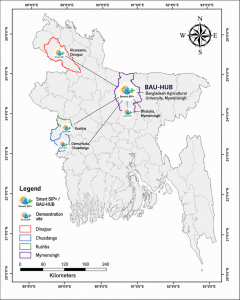
Figure 1: Distribution of ‘Hub and Spoke’ for SMART-SIP+ Implementation
BAU Hub – Mymensingh
The BAU Hub (Figure 2) has been developed and is currently serving as the central implementation point for research, testing, coordination, and innovation. Core facilities, monitoring systems, and control arrangements have already been established. The Hub is now providing technical support to the spoke stations in progress and coordinating field demonstrations, training, and stakeholder engagement activities.
Solar Irrigation Pump System:
- 10 kWp solar panel capacity with agrivoltaics systems
- 5 kW irrigation pump
Surplus Energy Consuming Technologies (SECTs):
- e-thresher
- Dryers
- Cold storage
- Reaper
- Sensors
Weather stations for monitoring
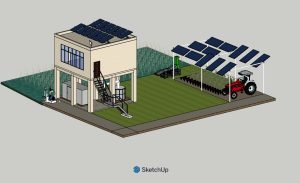
Figure 2: SMART-SIP+ Hub at Bangladesh Agricultural University, Mymensingh
Bhaluka, Mymensingh District (BAU and BADC)
The SMART-SIP+ Bhaluka site in Mymensingh District (Figure 3) has been established in collaboration with Bangladesh Agricultural Development Corporation (BADC). This site demonstrates surplus energy consuming technologies such as e-thresher (2.2 kW), PCM-based cold storage (2 Ton), reaper (4.5 kW), milling machine (7.5 kW), and EV charging station. It also consists sensors, and weather stations for monitoring. The system will be supported by a 16.8 kWp solar panel capacity and a 11 kW low-lift pump.
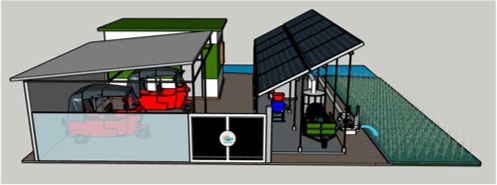
Figure 3: SMART-SIP+ field demonstration site at Bhaluka, Mymensingh
Khansama, Dinajpur District (BGEF)
The SMART-SIP+ Khansama site in Dinajpur District (Figure 4) is being developed by Bright Green Energy Foundation (BGEF). This site demonstrates surplus energy consuming technologies such as, PCM-based cold storage (5 Ton), E-mill (11 kW), Charging station. The system is supported by a 43.2 kWp solar panel capacity and a 18.5 kW submersible pump.
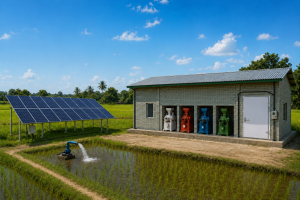
Figure 4: SMART-SIP+ field demonstration site at Khansama, Dinajpur
Damurhuda, Chuadanga District (WSUP)
The SMART-SIP+ Chuadanga site (Go Green Center) in Figure 5 is being established by Water Sanitation for Urban Populations (WSUP) in collaboration with WAVE Foundation. This site demonstrates water treatment plant (3000 liters per day) technology as the key surplus energy consuming application. The system will be supported by a 6.2 kWp solar panel capacity and a 3-kW submersible pump. The site has a plan to include a biogas plant in future.
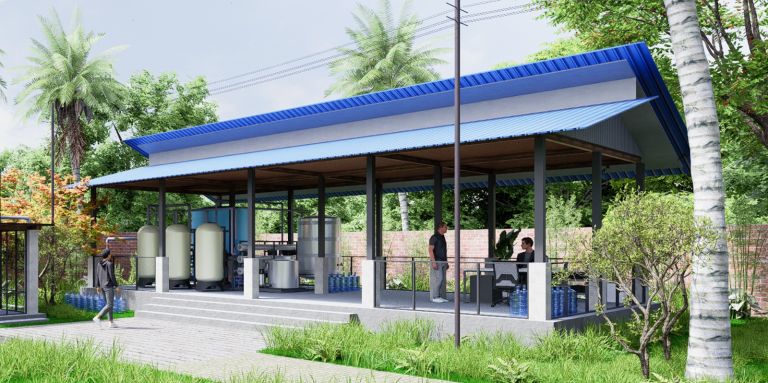
Figure 5: SMART-SIP+ field demonstration site at the ‘Go Green Center’ in Damurhuda, Chuadanga
SMART-SIP+ Demo Site Chuadanga – Pioneering the Energy-Water-Agriculture Nexus
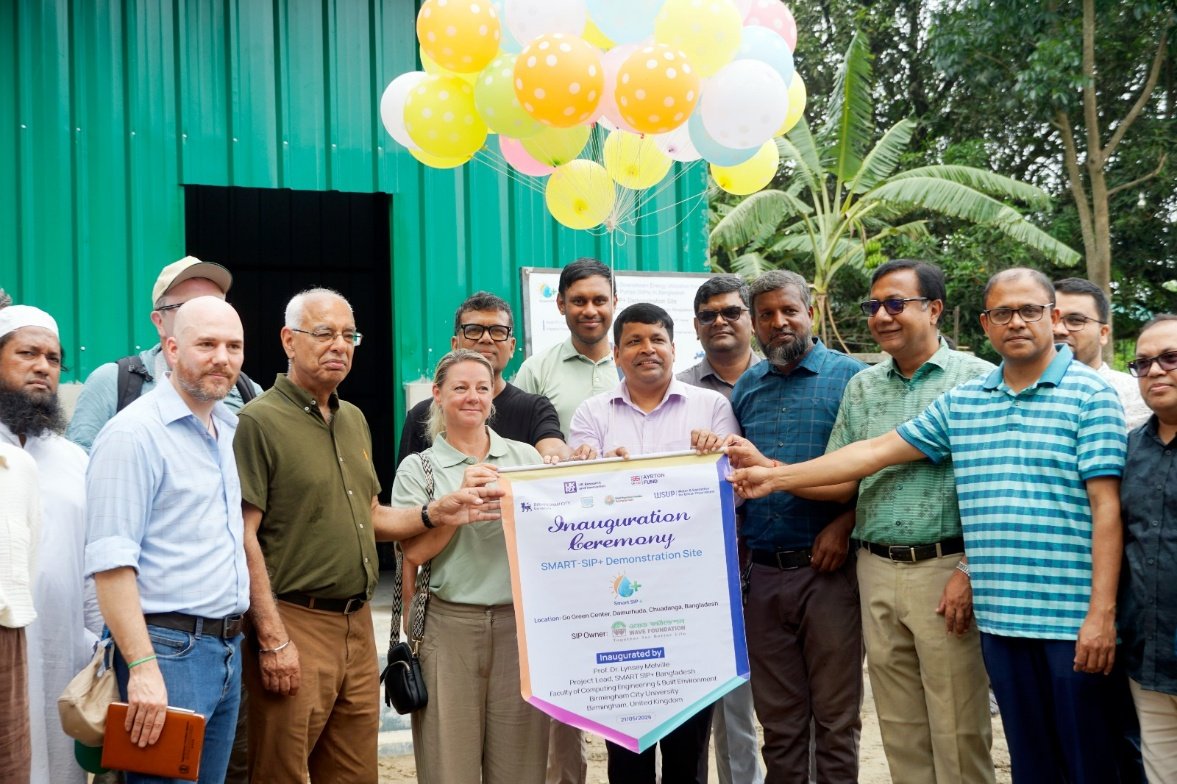
We recently celebrated the official inauguration and opening of the Water Treatment Unit at the SMART-SIP+ demonstration site, located at the Agroecology Learning & Tourism Centre (ALTC) operated by WAVE Foundation in Chuadanga, Bangladesh.
This project showcases an innovative approach to harnessing surplus downstream energy generated by Solar Irrigation Pumps (SIPs) to power essential community services. By converting otherwise unused renewable energy into practical solutions, the SMART-SIP+ initiative demonstrates how sustainable technologies can enhance access to safe drinking water and support broader rural development goals.
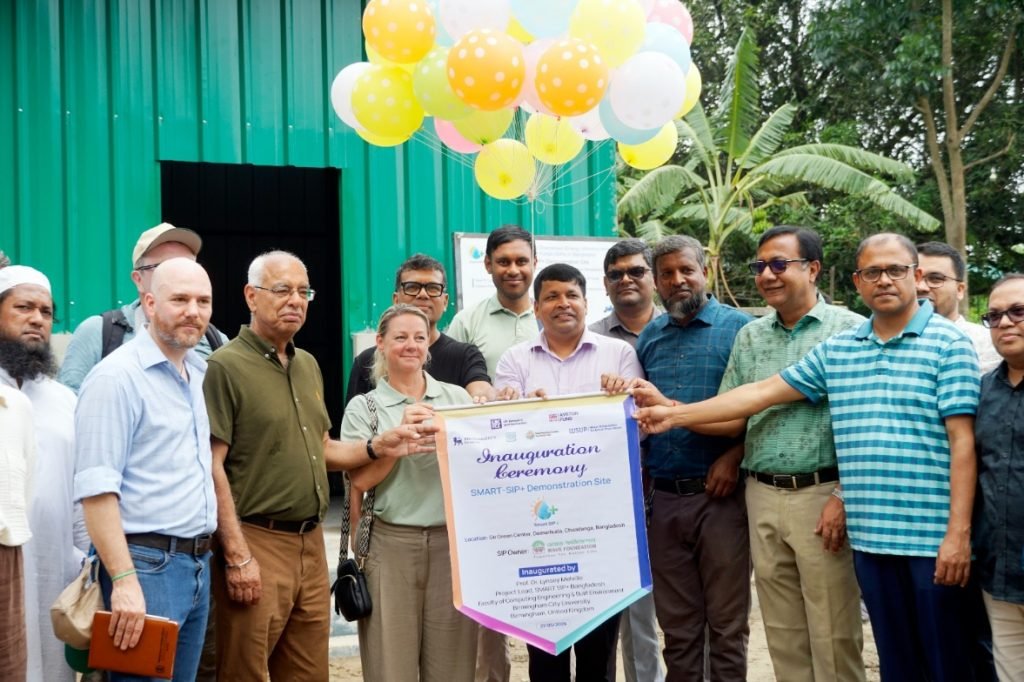
Figure 6: Inauguration of Chuadanga Demo Site
Why Launched this Initiative
Despite significant national progress in water supply and sanitation, approximately 41% of the population in Bangladesh still lacks access to safely managed drinking water. In Chuadanga, communities face a critical shortage of safe water due to multiple challenges, including arsenic and iron contamination of groundwater, as well as substantial declines in the water table during the dry season.
This initiative was designed to address these pressing issues by providing a sustainable and reliable source of treated drinking water. It aligns closely with national policies and strategies that promote a transition from standalone, untreated tube wells to centralized, community-scale treated water supply systems, particularly in climate-vulnerable and water-stressed regions. Through this approach, the project contributes to improving public health, strengthening climate resilience, and ensuring more equitable access to safe drinking water for rural communities.
What WSUP Did & Demo Site Completion
Water & Sanitation for Urban Populations (WSUP) played a pivotal role in designing and demonstrating the nexus among Energy, Water, and Agriculture.
- Supported the installation, operation, and maintenance of the solar-powered water purification system.
- The newly inaugured demo site features a fully operational 500 Liter/Hour water treatment unit, powered by a 6.2 kW solar PV system, ensuring the delivery of safely managed drinking water.
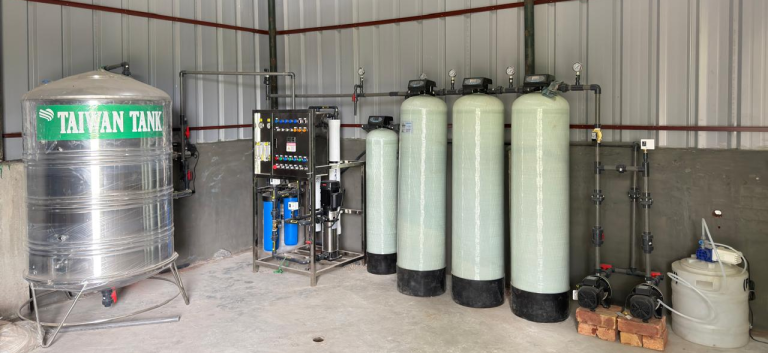
Figure 7: Water Purification System
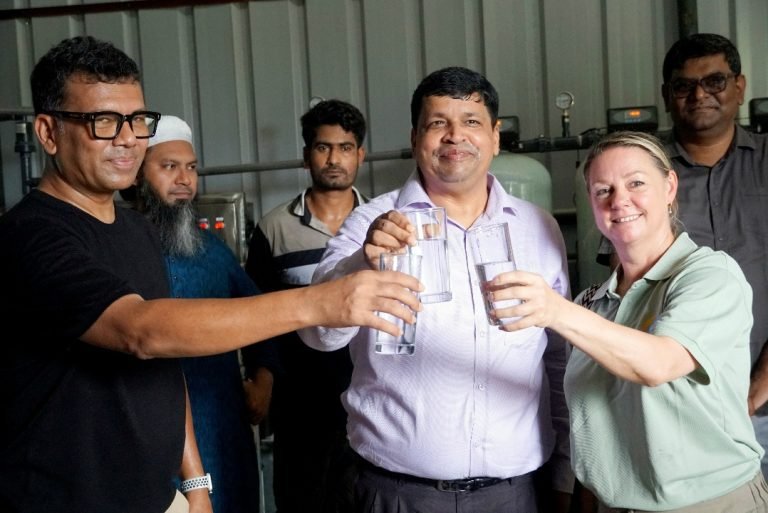
Figure 8: Treated water for drinking
What WSUP will do Next
With the successful launch of the water treatment plant, the project will now focus on expanding its integrated services:
- EV Battery Charging for Jar Delivery: WSUP will utilize the solar infrastructure to power electric vehicle’s battery, facilitating efficient jar water delivery to the community.
- Additional Power through Biogas Integration: To ensure uninterrupted operation during periods of low solar generation or peak demand, the project will integrate a 3kW biogas-powered generator. The biodigester will utilize Corn silage (energy crops and / or Crop Residue) and biomass collected from the Go Green Centre, providing a sustainable backup energy source while promoting circular resource use.
- Scale-Up: Continuously track data on water quality, consumer demand, and financial viability to validate the pilot model. These learnings will be shared with financing partners and SIP operators to promote wider replication and scale-up of the SMART-SIP+ model.
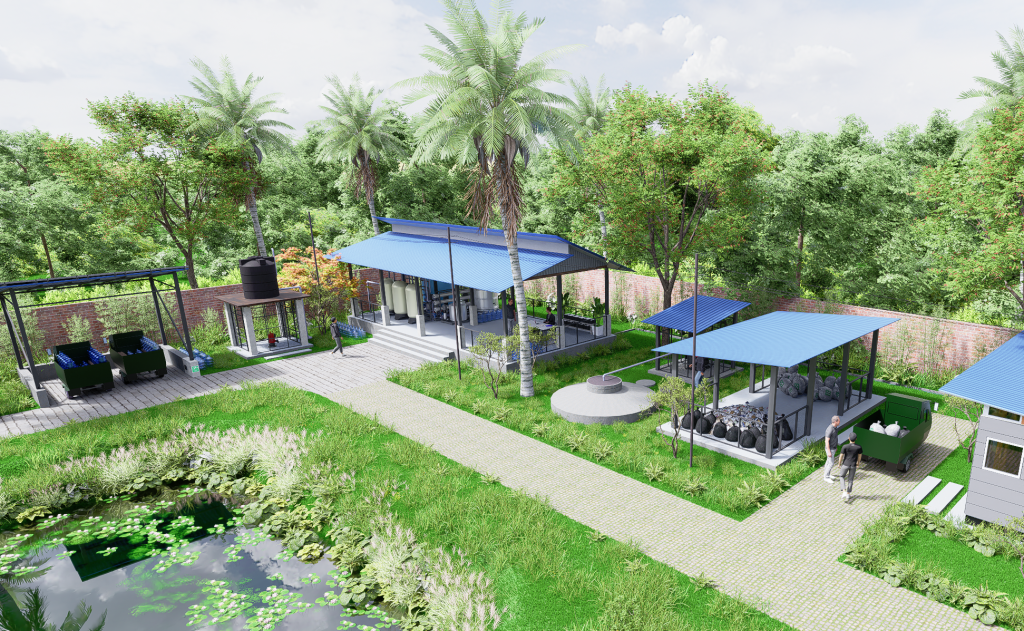
Figure 9: Conceptual 3D design of WSUP Site
Location and Site Attributes
- Site Name: Agroecology Learning & Tourism Centre (ALTC, previously known as Go Green Centre
- Location: Damurhuda, Chuadanga, Bangladesh.
- GPS Coordinates: 23.620319, 88.797106
- SIP Owner: Wave Foundation.
Table 1: Demo Site Details – Component and parameters.
Component | Key Parameters | Details |
Solar PV | Installed Capacity | 6.2 kW |
Pump Controller | Installed Capacity | 3 kW |
Pump | Installed Capacity | 3 kW |
Inverter | Installed Capacity | 6 kW (Hybrid Inverter) |
Battery | Installed Capacity | Li-ion Battery (51.2 V, 100Ah) |
Water Treatment Plant | Installed Capacity | 500 L/Hour water treated (2.6 kW~3 kW) |
Biogas Based Generator | Proposed Capacity | 3 kW |
Demonstration Site: Dinajpur, Bangladesh
Project Overview
SMART-SIP+ is an innovative rural energy initiative that demonstrates how solar irrigation infrastructure can be transformed into a multi-functional clean energy hub for agricultural communities. Located in Nolbari, Khanshama, Dinajpur, the project showcases an integrated approach to maximising the productive use of solar energy while enhancing agricultural productivity, food security, and rural livelihoods.
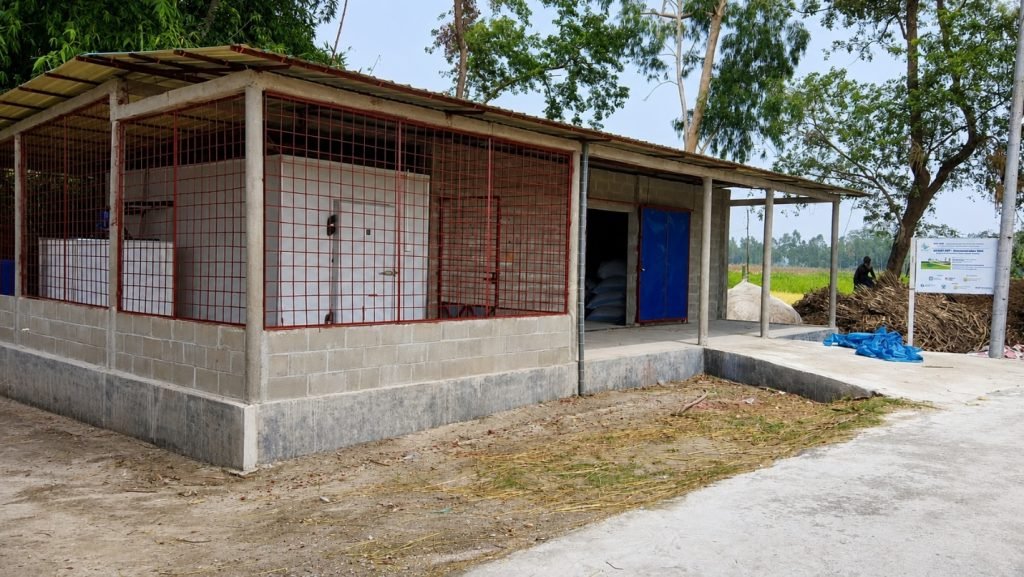
Figure 10: Overview of the SMART-SIP+ Demonstration Site, Nolbari, Khanshama, Dinajpur, Bangladesh
Table 2: Project Identification Details
Parameter | Details |
Project Name | SMART-SIP+ (Innovative Approaches to Downstream Energy Utilisation from Solar Irrigation Pumps) |
Demonstration Site | Dinajpur, Bangladesh |
Location | Nolbari, Khanshama, Dinajpur, Bangladesh |
GPS Coordinates | 25.8408°N, 88.8198°E |
Core Energy System
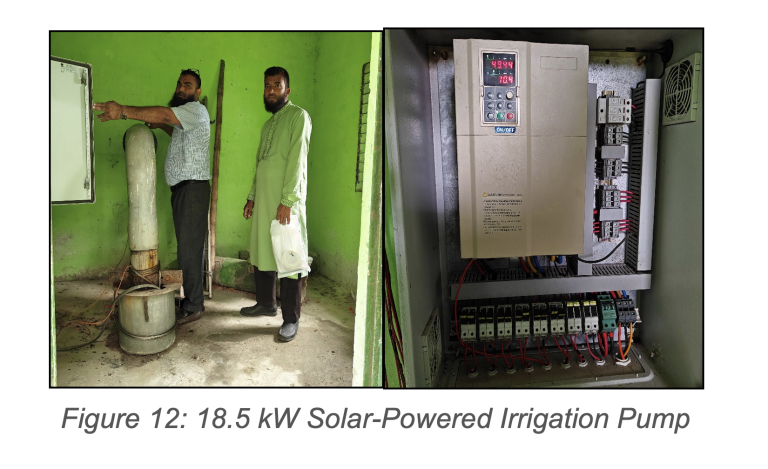
At the heart of the system is an 18.5 kW solar-powered irrigation pump supplied by a 43.2 kW solar photovoltaic (PV) array. A 22–30 kW Variable Frequency Drive (VFD) enables efficient and demand-responsive operation, ensuring reliable irrigation services while optimising energy use.
To support diversified energy utilisation and improve system flexibility, the site is equipped with a 30-kW hybrid inverter and a 35-kWh battery bank, allowing solar energy to be stored and managed efficiently for continuous operation of productive-use applications.
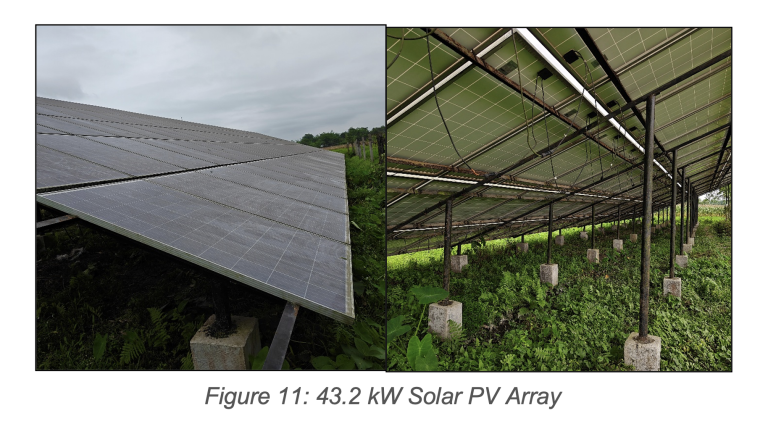
Table 3: Core Energy System Specifications
Component | Specification / Capacity | Notes |
Solar PV Array | 43.2 kW | Powers irrigation pump and productive-use loads |
Solar-Powered Irrigation Pump | 18.5 kW | Core irrigation asset |
Variable Frequency Drive (VFD) | 22–30 kW | Demand-responsive, energy-efficient operation |
Hybrid Inverter | 30 kW | Supports diversified energy utilisation |
Battery Bank | 35 kWh | Energy storage for continuous operation |
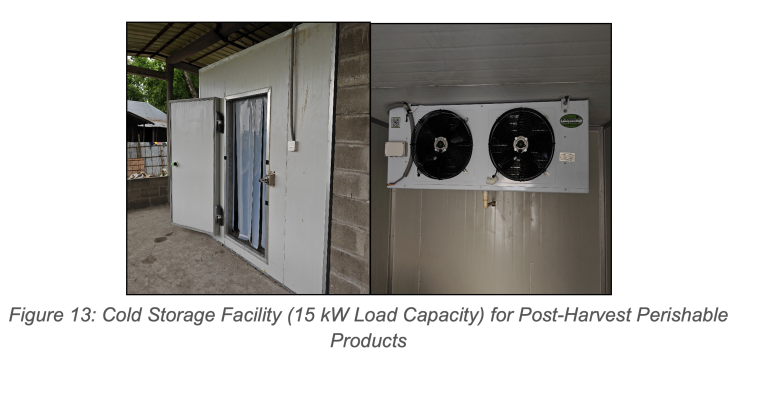
Cold Storage Facility | 15 kW (Load Capacity) | Post-harvest perishable storage |
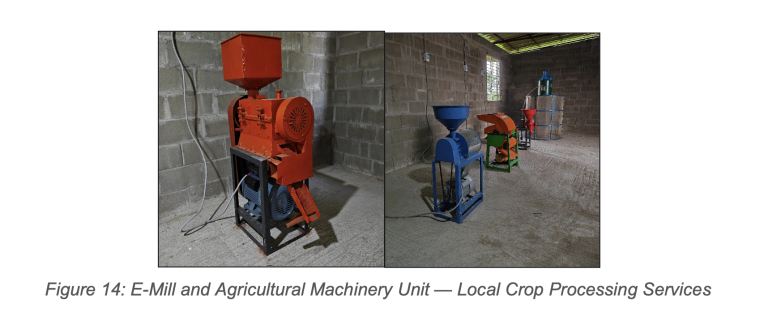
E-Mill & Agricultural Machinery | 11 kW (Combined Load) | Crop processing services |
Downstream Energy Utilisation
A key innovation of SMART-SIP+ is its downstream energy utilisation model. Instead of allowing surplus solar power to remain unused during periods of low irrigation demand, excess electricity is redirected to productive agricultural services through an integrated service facility.
Cold Storage Facility
Load Capacity: 15 kW
The cold storage unit provides reliable and affordable storage for perishable agricultural products, helping farmers reduce post-harvest losses, maintain product quality and access markets more effectively.
E-Mill and Agricultural Machinery Unit
Combined Load Capacity: 11 kW
The e-mill and agricultural machinery unit provides local crop processing services, reducing transportation costs, saving time and increasing value addition within the farming community. Together, these machines enable farmers to access essential post-harvest processing services locally. By providing milling, grinding, shelling and drying facilities within the community, the system helps improve product quality, reduce post-harvest losses, lower processing costs and enhance farmers’ incomes.
Table 4: E-Mill and Agricultural Machinery — Equipment Specifications
Machine | Power Rating | Purpose |
Rice Huller | 3.7 kW | Rice husking |
Chilli / Turmeric Grinder | 2.2 kW | Spice grinding |
Flour Grinder | 2.2 kW | Flour milling |
Maize Sheller | 1.5 kW | Maize processing |
Grain Dryer Machine | 1.2 kW | Post-harvest grain drying |
Total Combined Load | ≈ 11 kW | — |
Facility Layout and Infrastructure
All major components, including the solar PV array, irrigation pump, hybrid inverter, battery bank, cold storage facility and e-mill are integrated within a purpose-built facility strategically located adjacent to the main road. This accessible location enables farmers to conveniently access irrigation, storage and processing services from a single hub.
Table 5: Facility Footprint
Area | Dimensions | Floor Area |
Main Building (Core Operational Area) | 30 ft × 18 ft | 540 sq ft |
Total Facility (incl. veranda/balcony & ancillary spaces) | 45 ft × 27 ft | 1,215 sq ft |
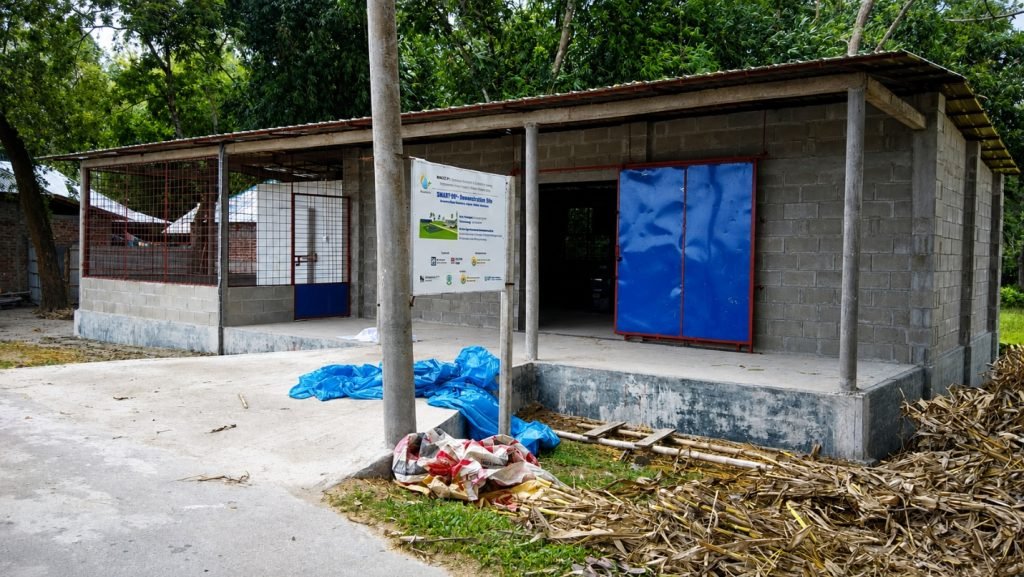
Figure 15: Purpose-Built Integrated Service Facility — Main Building (540 sq ft) and Total Footprint (1,215 sq ft)
Impact and Significance
The Dinajpur demonstration site highlights the potential of solar irrigation systems to serve as more than irrigation assets. By combining clean energy generation with productive agricultural services, SMART-SIP+ creates additional income opportunities, strengthens rural resilience, improves energy efficiency and contributes to sustainable agricultural development.
Key benefits include:
- Reduction of post-harvest losses through on-site cold storage
- Lower transportation and processing costs through local e-mill services
- Enhanced energy efficiency through VFD-enabled demand-responsive irrigation
- Continuous productive-use energy supply supported by battery storage
- Additional income opportunities for the farming community
Scalability and Replicability
As a scalable and replicable model, SMART-SIP+ demonstrates how solar irrigation infrastructure can become the foundation of a broader rural energy ecosystem, supporting Bangladesh’s transition toward a more sustainable, climate-resilient and inclusive agricultural future.
Report Prepared and Edited by
Dr Khondokar Mizanur Rahman, BCU
Information Provided by
Dr Sanaul Huda, BAU
Rakibul Islam, WSUP
Johir Imam, BGEF