SMART-SIP+ Project Outreach: BAU Team Visits UK Universities
17–24 June 2026 | Birmingham, Shropshire, and London; United Kingdom
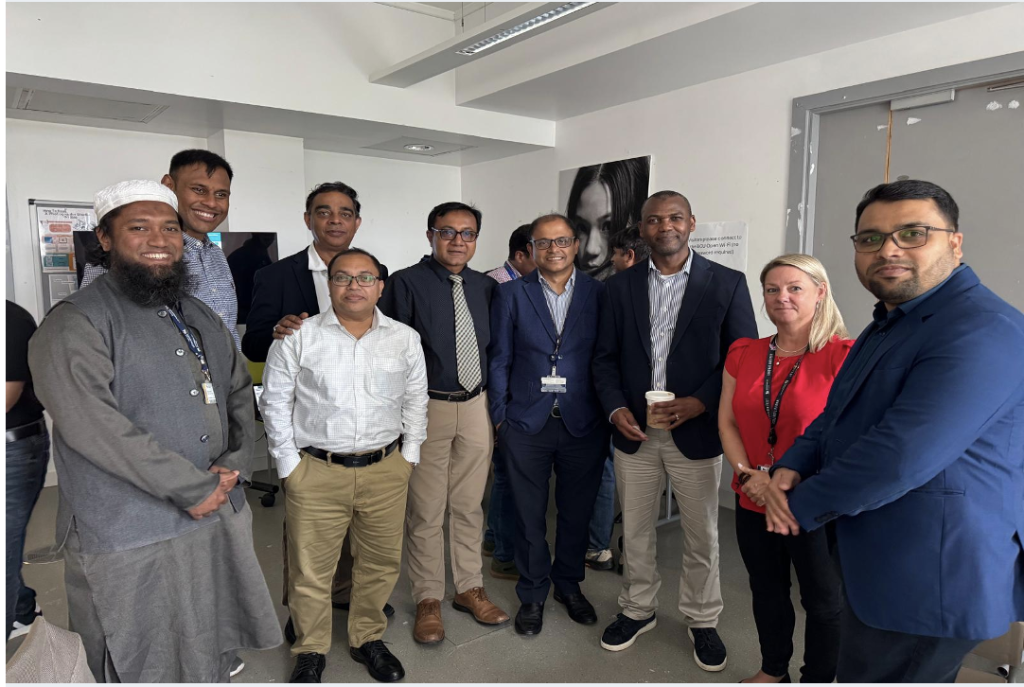
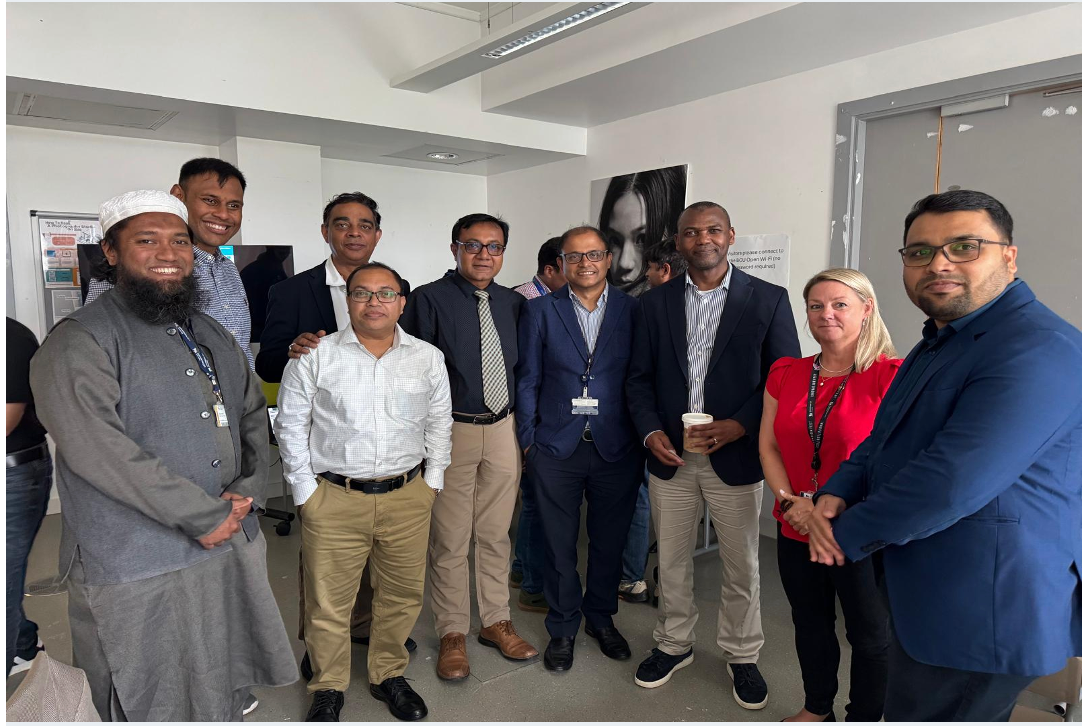
Members of the BAU and BCU teams during the SMART-SIP+ UK programme, June 2026.
A delegation from Bangladesh Agricultural University (BAU) visited Birmingham City University (BCU) in the United Kingdom from 17 June 2026 to 24 June 2026 under the SMART-SIP+ Project. The visit focused on strengthening Global North–South partnerships and translating research into real-world impact to accelerate the scaling of renewable energy and rural agri-tech solutions for smallholder farming like Bangladesh.
The week-long programme brought together technical workshops, collaborative research design, business model innovation, agri-tech markets, academic writing, and strategic engagement with the North-South energy and innovation networks. Through close research idea and outcomes exchange with global experts from academia, industry, and development organisations, the BAU and BCU teams examined how stronger technical, financial, institutional, and policy ecosystems can accelerate the diffusion of smallholder farms solar energy and agri-tech solutions.
BAU Team included: Dr. Chayan Kumer Saha, Dr. Md. Harun Or Rashid, Dr. Anisur Rahman, Dr. A. K. M. Abdullah Al-Amin Dr. and Md. Sanaul Huda
BCU Team included: Dr. Lynsey Melville, Dr. Cham Athwal, Dr. Florimond Guéniat, Dr. Navjot Sandhu, Dr. Shishank Shishank, Dr. Sandeep Dhundhara, Dr. Honey Yadav, and Dr. Khondokar Mizanur Rahman.
Purpose of the visit
The visit aimed to strengthen North-South partnership through technical knowledge exchange, collaborative research, and identification of scalable renewable energy solutions for irrigation, affordable on-farm and post-harvest agri-tech for smallholder farming systems.
Workshop Day 1: Smart Renewable Energy and Digital Agri-Tech
18 June 2026 | 9:00 AM–5:00 PM | Parkside Building, Birmingham City University
The first full-day workshop was held under the theme “Smart Renewable Energy and Digital Technologies for Sustainable Rural Agritech Systems.” It brought together BAU and BCU researchers, faculty members, staff, undergraduate and postgraduate engineering students, project partners and invited specialists from the United Kingdom, the USA, Bangladesh, and India.
The workshop opened with welcome remarks by Prof. Lynsey Melville, Prof. Cham Athwal and Dr. Sandeep Dhundhara from BCU. Technical contributions came from researchers and specialists linked with the University of Nottingham, Teesside University, the University of Warwick, the National Institute of Technology Raipur and industry. Sessions covered smart multi-vector energy systems, hybrid renewable energy, digital-twin modelling, solar irrigation pump technologies, grid integration, power quality, intelligent control and energy management for rural agricultural systems. These discussions helped the BAU and BCU teams examine how digital monitoring and automation can improve the reliability and productive use of solar energy in agriculture.
The afternoon sessions widened the discussion to phase-change-material-based solar cold storage, machine-learning applications in agrivoltaics, PV-integrated electric mobility and IoT-based predictive maintenance. The day ended with a roundtable on technology gaps, funding opportunities, future research priorities and possible international partnerships. The main message was clear: rural renewable energy systems can deliver greater value when irrigation is linked with cold storage, digital services, transport and other productive uses of electricity.
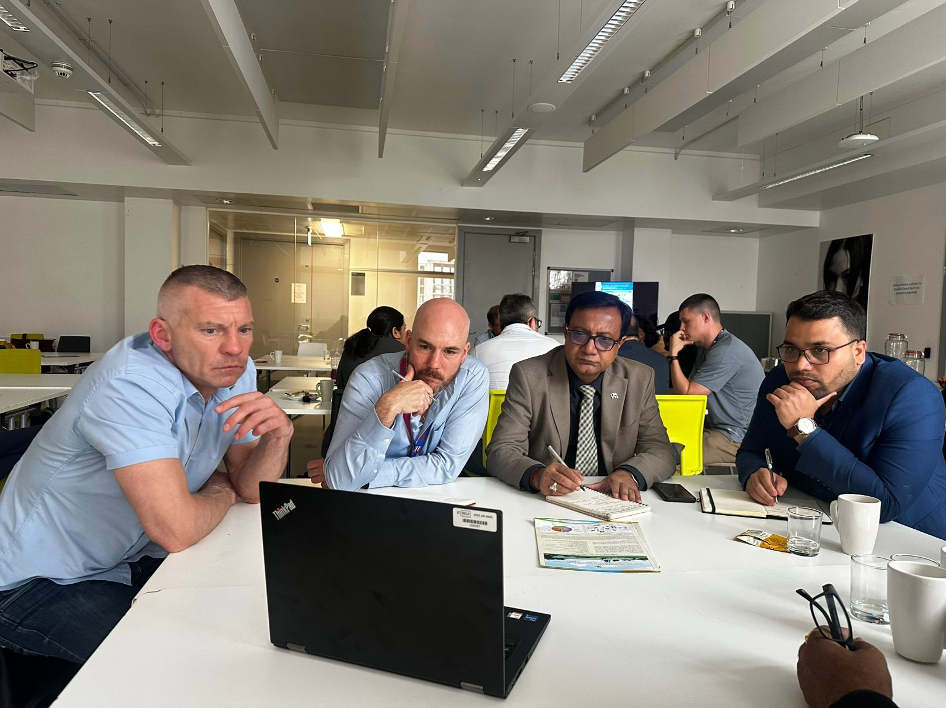
Both in-person and online idea exchange on smart renewable energy and digital technologies at BCU, 18 June 2026.
Workshop Day 2: Sustainable Business Models for Rural Energy Hubs
19 June 2026 | 9:00 AM–4:30 PM | Parkside Building, Birmingham City University
The second workshop shifted the focus from technology fix to short, medium and long-term economics and business models to promote wide scale diffusion. Held under the theme “Sustainable Business Models for Decentralised Renewable Energy Hubs,” the programme explored how solar irrigation infrastructure could operate as a wider rural service platform instead of remaining dependent only on irrigation income only systems highly dependent on government incentivization through subsidy.
BAU and BCU participants examined the energy hub as a business platform and discussed revenue-generating services through down-streaming surplus energy use such as solar-powered cold storage, reaper, dryer, thresher, milling machine, EV charging station and water treatment plant. The sessions also considered pay-per-use and subscription models, ownership arrangements, seasonal cash flow, the role of farmer organisations and the policy support needed to scale rural renewable-energy enterprises.
BCU colleagues, including Prof. Navjot Sandhu, Prof. Shishank and Dr. Honey Yadav, joined invited contributors from Aston University, Loughborough University, WSUP, IRMA India and the Bangladesh Embassy. Together, they added experience from renewable energy, international trade, water services, agricultural finance and rural enterprise development. Through group discussions, technical sessions and brainstorming sessions, the participants identified practical ways to combine engineering performance with affordable services, economics and business viability and benefits of farmers and rural communities.
Joint Planning for the Next Phase of BAU–BCU Collaboration
20 June 2026 | SMART-SIP+ team planning meeting
Following the two workshops, the BAU and BCU teams reviewed the main technical and business-model findings and discussed how these ideas could be embedded into future activities. The meeting focused on joint research priorities, research limitation and future pathways, institutional responsibilities, and responsibilities to the world to ensure food for all.
This planning session was important because it converted the workshop discussions into a practical direction for future work. Priority areas included improved solar irrigation management, productive use of surplus solar energy, cold-storage applications, net metering, clean-water services, digital monitoring, rural energy hubs and sustainable financing arrangements.
Research Writing, Innovation and Wider UK Engagement
22 June 2026 | Curzon Building and STEAMhouse, Birmingham City University
The BAU team joined BCU colleagues for a writing retreat focused on research papers, manuscript structure, publication planning and the development of funding bids. The activity gave both teams dedicated time to organise research findings, improve planned publications and discuss new project ideas based on the outcomes of the SMART-SIP+ work. This session also prioritized how SMART SIP+ research initiatives could be translated into academic excellence and real-world impacts.
The team also visited BCU’s STEAMhouse innovation and collaboration environment, to learn how interdisciplinary research, enterprise support and applied innovation can be brought together.
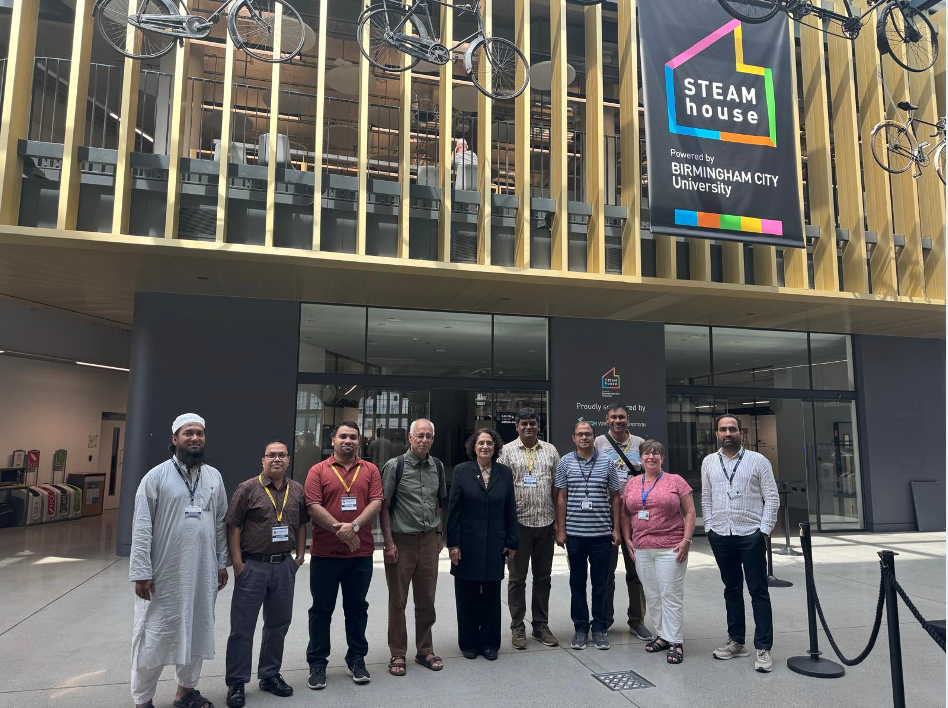
BAU and BCU colleagues working on joint publications, funding ideas and future project development, 22 June 2026.
The team explored arable farm agri-tech and livestock precision agriculture innovations at Harper Admas University, Newport, Shropshire, UK to understand how SMART SIP+ project solarization solutions could embrace digital innovations as part of future pathways. Mr Parmjit Chima, Executive Academic Director of Harper Adams University, Telford guide the SMART SIP+ team and shared valuable insights into opportunities and challenges in advancing digital innovations for smallholder farms.
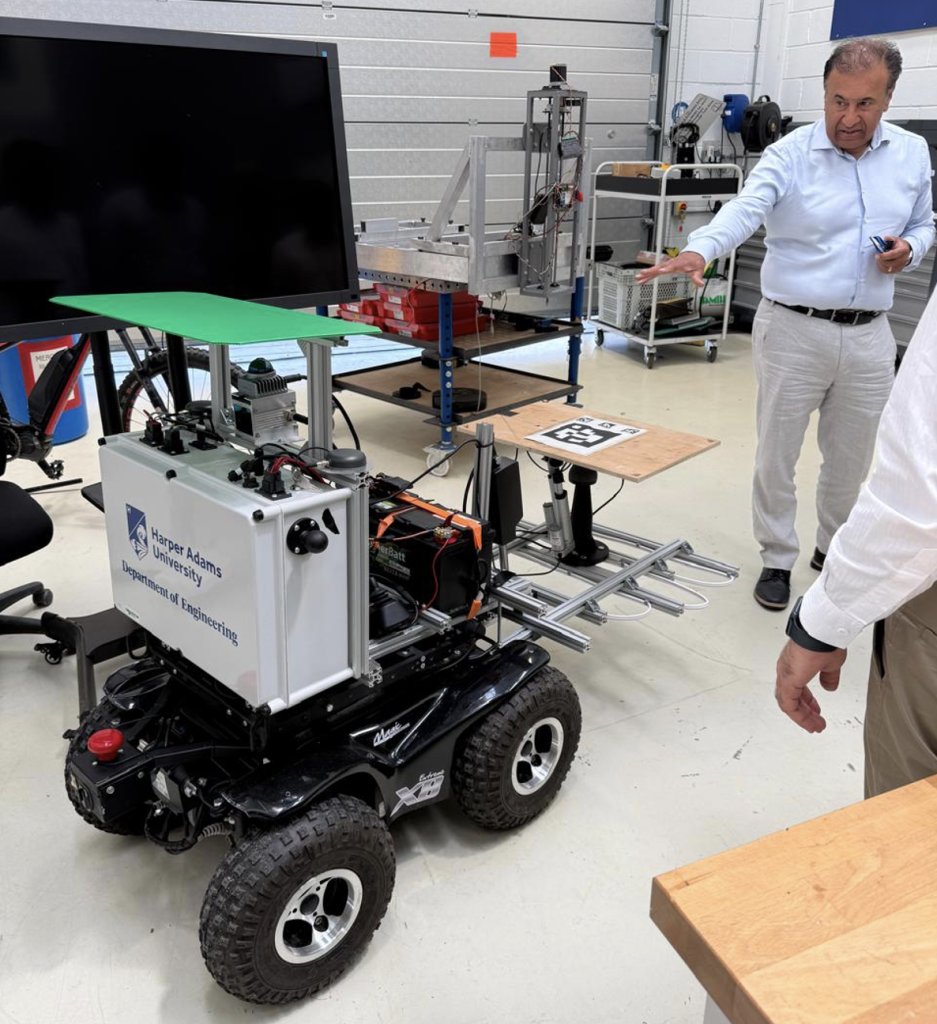
The SMART SIP+ project team visit at Harper Admas University, 23 June 2026
SMART SIP+ Project lead Prof. Lynsey Melville from BCU and Bangladesh country lead, Prof. Chayan Kumer Saha from BAU joined the Ayrton Workshop in London on 23 June 2026. During the workshop, The team presented poster at the dedicated session with the aim to softly network across projects again and reacquaint each other at this halfway point in the programme.
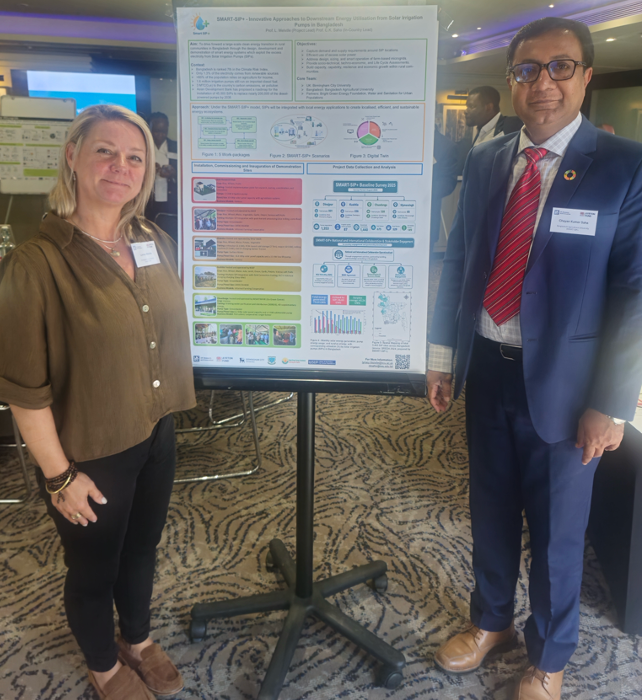
The Project Lead and In-Country Lead at UKRI Ayrton Challenge Programme – Mid-Point Workshop at the Leonardo Royal Hotel London City, on Tuesday 23rd June 2026
Moving Forward Together
The UK visit showed that the rural energy transition requires more than installing renewable-energy technologies. Sustainable impact depends on reliable engineering, useful energy services, sound business models, supportive institutions and continued research cooperation. By bringing these areas together, the BAU–BCU programme created a stronger foundation for practical and low-carbon solutions for agriculture and rural communities in Bangladesh.
The partnership will continue to build on the knowledge, relationships and project ideas developed during the visit, with a shared commitment to advancing research that can move from the laboratory and pilot stage into real-world rural applications.
The BAU team expressed its sincere appreciation to the UKRI Ayrton Challenge Programme for their generous financial support, as well as to BCU colleagues, invited speakers, and partner organisations for their technical contributions and commitment to continued collaboration.
#SMARTSIPPlus #BangladeshAgriculturalUniversity #BirminghamCityUniversity #SolarIrrigation #RenewableEnergy #SmartAgriculture #ResearchCollaboration #SustainableDevelopment