- This project is funded through UKRI by the UK government’s Ayrton Fund , a £1 billion commitment to research and development in clean energy technologies and business models. The Ayrton Fund aims to accelerate the clean energy transition in developing countries, by creating and demonstrating innovative clean energy technologies and business models.
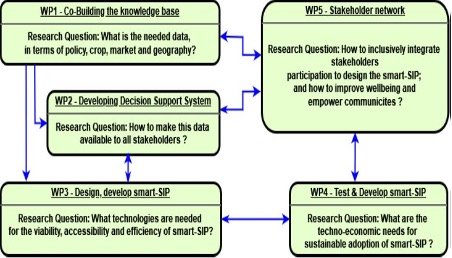
Research Questions and Work Packages
Work-Packages Outline
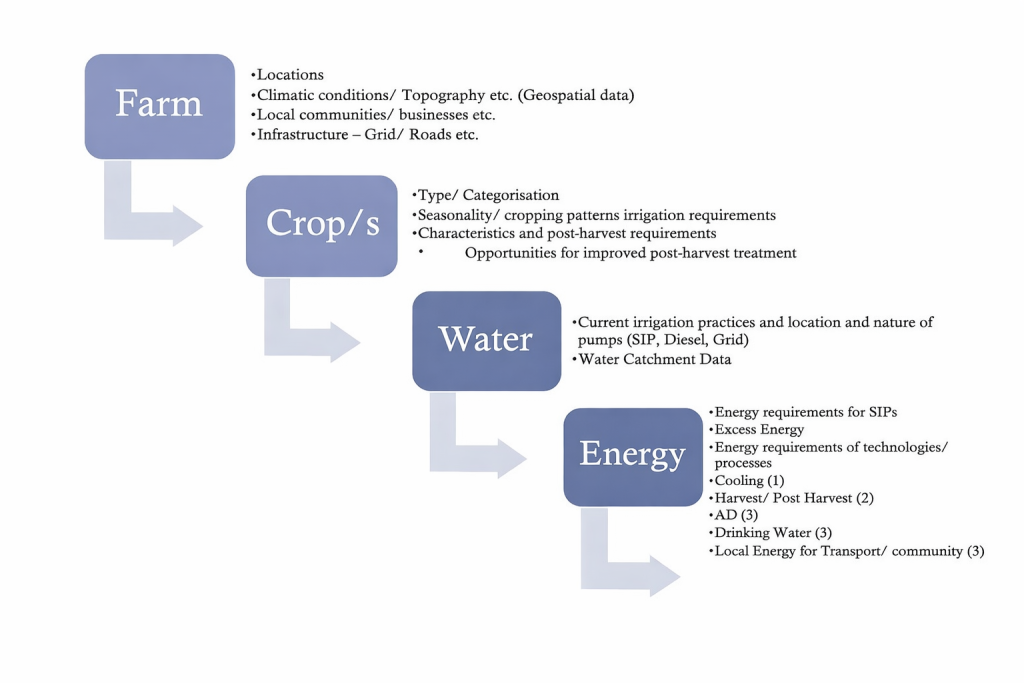
- WP1 Approach - Desk-based research/ collation of open-source datasets, participatory research involving local communities and stakeholders e.g. surveys, focus group discussions.
- WP1 Outcome - Greater understanding of scale and nature of the opportunity; identification of macro environmental challenges and opportunities & barriers to adoption will help to inform policy and decision making.
- WP2 Approach - This work-package combines stakeholder participation and software engineering approaches to develop online tools that are accessible (considering any issues of access to ICT, digital literacy/ internet access), adaptable and functional.
- WP2 Outcome - This WP will enable investors and decision makers to strategically target action towards high potential opportunities, tailor solutions to localised circumstances and over greater support to farmers and operators.
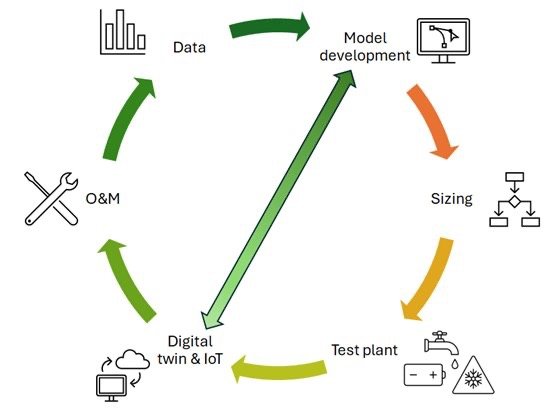
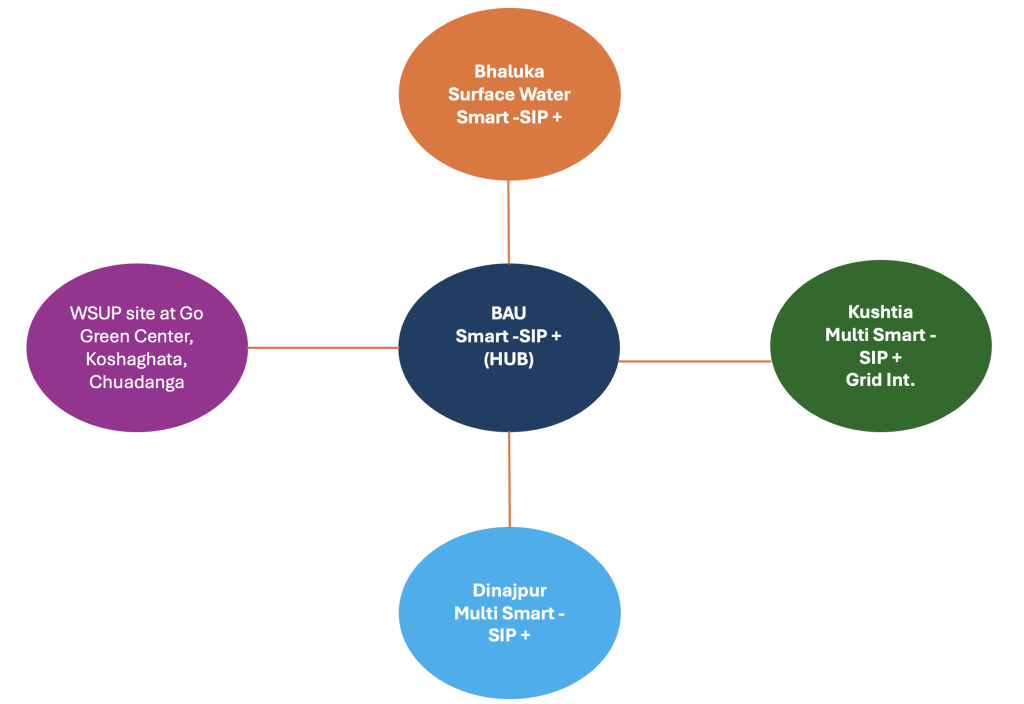
- WP3 Approach - Leverage simulation tools such as HOMER/ MATLAB, to accurately model candidate Smart-SIP+ configurations. Testing of experimental implementations at BAU Hub. Optimising the design and sizing of Smart-SIP+. Using a digital-twin approach to control/optimise operations and monitor maintenance needs.
- WP3 Outcome – Multiple process integration scenarios informing WP4, Viable Smart-SIP+ systems. Greater understanding of challenges and opportunities of SIP+ monitoring and control.
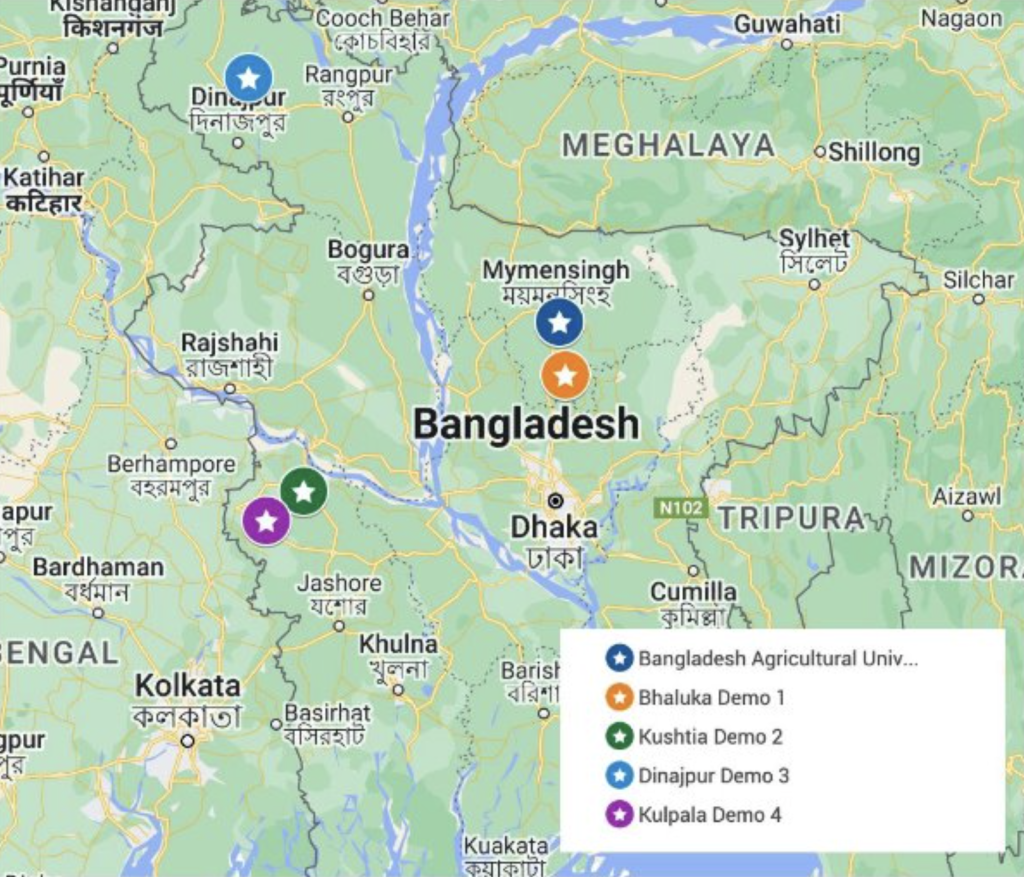
- WP4 Approach - WP4 builds on WP3 by providing longitudinal data collection across seasons and within different local environments and conditions. Field testing and demonstration of various technology integration scenarios to optimise design, operation and sustainability (economic, societal, environmental).
- Testing: Existing SIP+AD (evaluate bioenergy supplementation to meet seasonal shortfalls) Drinking water purification and distribution, EV and domestic use.
- Pump Type: Groundwater
- Pump/Panel Size: 18.5kW/43.52kW
- Business Model: Peri-urban/ cooperative/ single farmer
- WP4 Outcome - Optimised design and operation of integration scenarios leading , increased autonomy of farmers with increased confidence in smart appropriate technology.
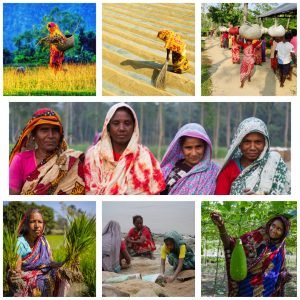
- WP5 Approach - Leveraging the networks,expertise and experience of our partner organisations (BAU, BGEF,WSUP) who have trusted relationships with farming communities and cooperatives around the demonstration sites (and beyond) we will capture the perceptions and opinions of these communities including underrepresented and marginalised groups. Together we will co-create solutions that are inclusive to all. Combining an international stakeholder network and our project steering committee will provide access to a broad range of individuals and organisations that represent actors across the whole supply chain.
- WP5 Outcome - Open dialogue with key actors, co-creation of future interventions, solutions and approaches designed with user participation. Awareness raising. Increased knowledge and confidence in the technologies. Addressing skills deficit. Empowering farmers/ women.
Our focus is on community engagement, stakeholder participation and empowering women
Understand perceptions and behaviors.
Explore challenges and opportunities.
Embrace aspirations and ambitions.
Future solutions.
Reflective of end user requirements.
Sensitive to local socio-cultural needs.
Data will also be collected to support.
Socio-technical assessments.
Socio-economic considerations to develop appropriate business models.